
What is a flow test and why does it matter?
What It Is
A flow test measures the consistency (or "slump") of a liquid flowing screed before it's poured to confirm that it's mixed correctly with water and sand. We don't want the screed to be too wet, nor too dry.
When It's Carried Out
Flow tests are typically carried out first at the production plant, and then again on site using a flow kit immediately before the pour begins, giving installers a final check that the batch delivered matches specification before it goes down.
Our ready-mix partners receive our product from us – screed binder and admixtures – in powder form. They proportion them and mix them with sand and water following our special (and very secret!) recipe for each product. Because the chemistry of each screed is different, they test the mixture before transporting it to the installation site.
A flow test must show a specific result. The ready-mix plant operators will test the screed and tweak its consistency as many times as necessary to achieve the right result. They are trained to gauge the mix's readiness by performing a flow test after each change. Once satisfied, they transport the mixed screed in one of their trucks, specialised to maintain its qualities during transit. As soon as the screed arrives on the construction site, the installer will perform another flow test to ensure that the screed has retained its consistency and will perform as expected during and after installation.
How It's Done
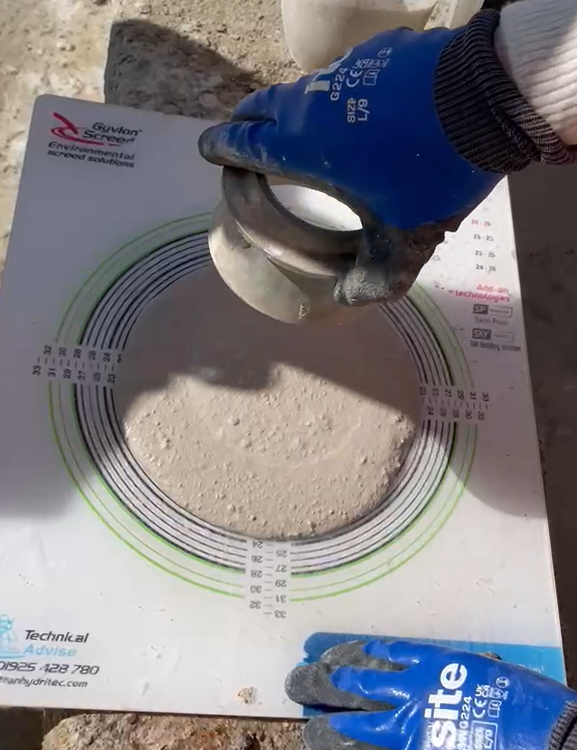
Using a flow cone and flow plate (in accordance with BS 8204-7), the cone is placed on a flow plate, filled with screed, then lifted, allowing the material to spread naturally. The resulting spread should typically fall within a specific range. For example, our ECO screed requires a diameter of 240 mm, whilst THERMIO MAX performs best at 250 mm flow diameter. FINIO should cover a diameter of 270 mm for best results, and EXCELIO – 300 mm. The target flow for each of our liquid screed products differs depending on their chemistry, and if the flow measured is below that (too low), water needs to be added to bring it back into tolerance.
Before pouring the main body of screed, carry out a flow test to confirm the mix has reached the correct consistency. Fill the flow ring, place it on a clean, level, non-absorbent surface, then lift it smoothly and let the screed spread out on its own. Measure the diameter of the spread in two directions at right angles to each other and record the average. Compare this reading against the target flow value specified for the product and only proceed with the pour once the mix falls within the required range. If the flow is outside tolerance, adjust the mix and retest before continuing. Pouring an incorrectly mixed screed can compromise levelling, strength, and finish, so proceed only when you're satisfied with your flow test. Our flow plates are designed to show the desired diameter for each product, so follow these easy guidelines when testing our screeds.
Why It Matters
A flow test is essential when working with anhydrite liquid screeds, as it helps ensure that the material achieves the correct flowability, which in turn improves surface finish, strength, and overall floor performance. Getting the consistency wrong causes real problems on site. For example, if the mix is too wet, coarse aggregates can settle out and create a non-uniform screed, and if it's too dry, the screed becomes difficult to handle and place correctly. The correct consistency also helps prevent drying shrinkage and other defects.